hppa
|
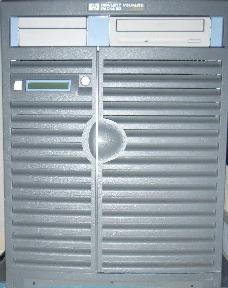
OpenBSD/hppa runs on a large set of the 32-bit Hewlett Packard Precision Architecture workstations and servers (HP PA-RISC). A subset of the 64-bit models are supported in 32-bit mode, as well. A mailing list dedicated to the OpenBSD/hppa port is available at hppa@openbsd.org. To join the OpenBSD/hppa mailing list, send a message body of "subscribe hppa" to majordomo@openbsd.org. Please be sure to check our mailing list policy before subscribing. The current port maintainer is Mark Kettenis (kettenis@openbsd.org). Others are definitely welcome to contribute! |
|
History
This project was started in those days when the only open source operating systems for HP PA-RISC computers were Lites and MkLinux. These two sources were a major supply of information and code for initial development of the OpenBSD/hppa port. HPBSD is encumbered by HP proprietary code and USL licensing and is not publicly available. One of the major direct benefits from previous porting efforts (besides the code, of course) was support for HP PA-RISC in GCC and binutils, which allowed quick building of a cross-tools environment for development.
Later on, Hewlett-Packard decided to sponsor a Linux port to the PA-RISC family, which actually resulted in some proprietary documentation being released, even though their target was a different class of 9000 machines back then.
Current status
Currently, all the supported systems boot multi-user. In addition to the release, full snapshots are made periodically, and work is ongoing to provide better hardware support.
Supported hardware
For a system component and device driver listing for this architecture, see intro(4/hppa).
- cpu(4) support for the 7000,
7100, 7100LC, 7150, 7200, 7300LC, 8000, 8200, 8500, 8600, 8700 processors
found on the following systems:- PA7000-based: 705, 710, 720, 730, 750
- PA7100-based: 715/33, 715/50, 715/75, 725/50, 725/75, 735/100, 742i, 745i, 747i, 755/100
- PA7100LC-based: 712, 715/64, 715/80, 715/100, 715/100XC, 725/64, 725/100, 743i, 748i, SAIC Galaxy 1100
- PA7150-based: 735/125, 755/125
- PA7300LC-based: 744, 745, 748, A180[C], B132L[+], B160L, B180L+, C132L, C160L, Dx20, Dx30, RDI PrecisionBook (C160L)
- PA7200-based: C100, C110, J200, J210, J210XC, Kx00, Kx10, Kx20
- PA8000-based (in 32-bit mode): C160, C180, J280, J282
- PA8200-based (in 32-bit mode): C200, C240, J2240
- PA8500-based (in 32-bit mode): B1000, B2000, C360, C3000, J5000, J7000
- PA8600-based (in 32-bit mode): B2600, C3600, J5600, J6000, J7600
- PA8700-based (in 32-bit mode): C3650, C3700, C3750, J6700, J6750
- mem(4) memory controllers for up to 2GB of memory.
- io(4) Bus/IO controllers and bridges, including:
- dino(4) Dino/Cujo or elroy(4) Elroy PCI host bridges providing pci(4) PCI buses, supporting most pci(4) cards.
- ppb(4) standard PCI-PCI bridges, including PCI expansion backplanes.
- cbb(4) YENTA-compatible PCI-CardBus bridges supporting some cardbus(4) and pcmcia(4) cards, on some models.
- oosiop(4), osiop(4) and siop(4) on-board SCSI controllers.
- pciide(4) IDE drive controller supporting wd(4) and cd(4) drives.
- dc(4) on-board Digital 10/100Mbit ethernet.
- ohci(4) on-board USB controller supporting most usb(4) devices.
- sti(4) SGC/GSC/PCI graphics controllers.
- com(4) on-board ns16550 serial ports.
- lpt(4) on-board parallel port.
- harmony(4) on-board CS4215/AD1849 audio.
- hilkbd(4) HIL keyboards.
- hilms(4) HIL mice and graphics tablet.
- hilid(4) HIL ID modules.
- pckbd(4) PS/2 keyboards.
- pms(4) PS/2 mice.
- power(4) soft power button as available on some models.
- lcd(4) front-panel display on some models.
- Battery-backed real time clock.
Unsupported systems and devices
The following systems are unsupported, but may eventually be coaxed to life. Some of them will boot OpenBSD, but there is not enough device support for OpenBSD to be really useful on them.- PA7100LC-based: Dx00, Dx10
- PA7200-based: Dx50, Dx60
- PA8000-based (in 32-bit mode): Dx70, Dx80/R380, Kx50/Kx60
- PA8200-based (in 32-bit mode): D390/R390, Kx70/Kx80
- HP 9000 E-Class (with limited I/O)
- Most Hitachi PA-RISC workstations and servers
The following systems are very unlikely to be supported since they either have incompatible firmware (the 3000s) or almost completely undocumented I/O subsystems (the 8x7s).
- HP 3000 900
- HP 9000 8x7 (F, G, H, I-Class)
- PA8500-based: A400/rp24x0, L1000/L2000
- PA8600-based: A400/rp2450, L3000/rp5400
- PA8700-based: A500/rp2470, N4000/rp74x0, rp8400
- PA8800-based: A500-9x, C8000, rp3410, rp3440, rp4410, rp4440, rp7420, rp84x0
- PA8900-based: C8000, rp3410, rp3440, rp4410, rp4440, rp7420, rp84x0
Convex PA-RISC systems (NUMA supercomputing clusters consisting of one or more 8-way SMP nodes with PA7100 or PA7200 CPUs) are unlikely to be ever supported.
All other HP 9000 6xx, 8xx and 9xx server systems will probably never be supported by this port since they are of 1.0 PA-RISC architecture, which is substantially inferior to the 1.1.
Unsupported peripherals
This list is not meant to be exhaustive either, but sums up the most commonly encountered devices on hppa machines.
- dino(4) Dino in card mode.
- pcmcia(4) PCMCIA adapters.
- mongoose(4) EISA bus adapter.
- VME controller
- Any HP-PB devices
- On-board floppy controller
- Dino's PS/2 keyboard and mouse controller
- Power management on PrecisionBook
Getting and installing
The latest supported OpenBSD/hppa release is OpenBSD 7.9. Here are the OpenBSD/hppa installation instructions.
Snapshots are made available from time to time, in this location as well as on a few mirrors. Here are the OpenBSD/hppa snapshot installation instructions as well.
Hardware documentation
Most of the following documents have been released by Hewlett-Packard for the PA-RISC Linux project.
- HP PA-RISC CPUs
- Processor Dependent Code/I/O Dependent Code Interface
(selected chapters from "PA-RISC I/O Architecture Specification") - Bus controllers/bridges/adaptors
- Stinger graphics
- LSI 53C875 SCSI I/O Processor
- Intel i82596DX/SX and i82596CA Ethernet Controllers
Of course, no hppa page, be it OpenBSD or not, could pretend to be serious without linking to the essential OpenPA reference website.